Tree (a):
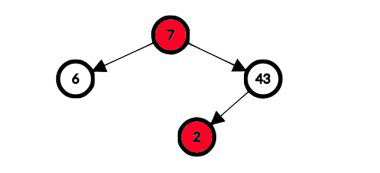
This is not a valid BST! The $2$ is located in the right sub-tree of $7$, which breaks the BST property.
Remember that the BST property applies to every node in the left and right sub-trees, not just the immediate child!
All AVL trees are BSTs. Because of this, this tree can't be a valid AVL tree either.
Tree (b):
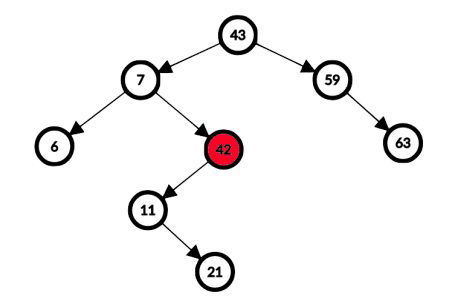
This tree is a valid BST! If we check every node, we see that the BST property holds at each of them.
However, this is not a valid AVL tree. We see that some nodes (for example, the $42$) violate the balance condition, which is an extra requirement compared to BSTs. Because the heights of $42$'s left and right sub-trees differ by more than one, this violates the condition.
Tree (c):
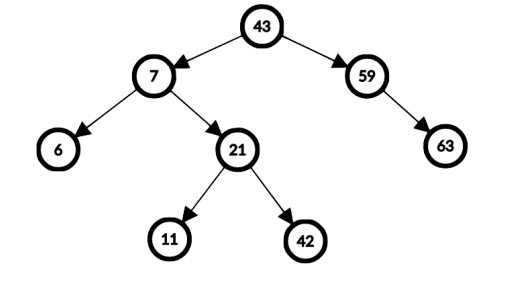
This tree is a valid BST! If we check every node, we see that the BST property holds at each of them.
This tree is also a valid AVL tree! If we check every node, we see that the balance condition also holds at each of them.
